Sunday, December 20, 2015

The Parvo Cure Hoax and The Potential Danger of "Herbal Remedies"

 In 1978 the parvo virus was recognized as a separate virus and spread like wildfire. Parvo most often strikes puppies with a compromised immune system that have not been properly vaccinated before exposure to the virus. The diagnosis of parvo is made by a veterinarian after a thorough exam and testing for the presence of the virus itself in the feces.

There are two forms of parvo. The form of parvo most frequently recognized, presents with lethargy, severe bloody diarrhea, nausea and a lack of appetite. A puppy with the beginning stages of parvo may stand over a bowl of water, but will not drink. The puppy is becoming quickly dehydrated at this stage, and if he does drink, will most likely vomit the contents. As the bloody diarrhea becomes more explosive, if not treated with IV fluids, the puppy will die.

The second form of parvo attacks the heart muscle. The puppy will appear lethargic and dies within a matter of hours. This strain of parvo is considered rare, but very deadly.

Since parvo is a virus, it has no cure. Puppies survive with good quality supportive care. Treatment is immediate hospitalization, continuous IV fluids, medication for nausea, and antibiotics to stop any secondary bacterial infection from taking advantage of the compromised immune system. The puppy can be hospitalized for a few days to a week.
Parvo diarrhea

Nothing, including food, water, and medication can be given until the diarrhea and vomiting has stopped. Force feeding, use of oral hydration formulas, and giving medication by mouth, rarely do anything but make the puppy vomit.

Parvo can be expensive to treat, so it is not surprising that pet parents often look for alternatives to hospitalization. A pet parent may search the internet, looking for anything, that can help the puppy.

In such a time of desperation, it can be easy to grab onto any hope of a "parvo cure." Unfortunately, these "cures" usually result in the death of the puppy.

One such "parvo cure" claim has been made by a nutraceautical company, Amber Technologies.

Nutraceuticals, commonly sold as nutritional products, are derived from food sources and are said to have extra health benefits in addition to basic nutrition. These products can be sold, but must not make any claim suggesting they are a medication or offer a cure. 


Too often, these companies cross the line, as Amber Technologies did when the company claimed in its Puppies and Parvo: A Self Help Guide e-book and again on their parvo puppy website, that its products could cure parvo 85% of the time, and prevent it 95% of the time. Amber Technologies produce and market Paxxin (formally Parvaid) and Vibactra Plus, among others.

 In 2014, the Food and Drug Administration (FDA), sent a warning letter to Amber Technologies. The letter stated that:

We have determined that several of your products marketed as “nutraceuticals for pets” are intended for use in the mitigation, treatment, or prevention of disease in animals, which makes them drugs under section 201(g)(1)(B) of the Federal Food, Drug, and Cosmetic Act (the FD&C Act) [21 U.S.C. § 321(g)(1)(B)].Further, under the FD&C Act, drugs intended for use in animals require an approved new animal drug application unless they are generally recognized as safe and effective. As discussed below, we have determined that your drugs are not generally recognized as safe and effective and therefore your marketing of them without an approved new animal drug application violates the law.”

Further investigation revealed that the products were created by those with no medical training.


On page 14 of their e-book, the company with no medical training, referred to Vibactra Plus as "Amber Technology's antibiotic."
Actual screen shot from the e-book

  The company continues this claim on page 24 of their e-book: 

Actual screen shot from the e-book

Not only does the company not seem to understand the years of scientific research and development required to create an antibiotic, they make it clear in the book that they have a lack of understanding of the workings of the immune system. On page 14, they explain that veterinarians give antibiotics “due to the lack of white blood cells the body is producing.” While the white blood cell count does drop, antibiotics do not encourage the white blood cells to multiply. Antibiotics fight possible opportunistic bacterial infections. Parvo is a virus. No anti-viral exists at this time that will fight this virus.

The claim is also made that by using their products Vibactra Plus and Parvaid (Paxxin), the puppy will eat within two days compared to four days without their products (page 55).

On page 42 of the e-book, “hydrating enemas” are given as a viable option to IV fluids. The author claims that the large intestine will absorb the fluid and that a series of enemas should be given to prevent dehydration. The author misses the key component of the parvovirus....it destroys the lining of the intestines making it difficult, if not impossible, to absorb any fluids. 
 
The author addresses the research performed on their products with a “Parvo Study Sheet” (page 69). This “research” is referred to as “case studies”. The health of the puppies are described as “preaty good” (their spelling) , “wonderful” “short-tempered”, “fine”, and “great”.  THAT is the preposterous "clinical research" that went into the creation of these products.

Screen shot page 69
 
The two primary “nutraceuticals” mentioned in the book cost between $71-204 depending on the size purchased.

Since the FDA warning, the company now states that their products may help certain conditions, but have not removed the e-book from the web.

Interestingly, even though the company owners admit that they have no medical training, they still offer "parvo consultations."

Fear strikes all animal lovers when a pet contracts the parvo virus. In many ways, however, this medical deception is even more frightening. How many pets have died as a result of using these "herbal remedies" instead of using conventional medicine (including IV fluids, anti-nausea meds, and real antibiotics) that has saved thousands of puppies? 

While I do not discount the validity of some herbal treatments, Amber Technology crossed a line that should infuriate any animal lover. 

Our pets depend on us to care for them. Our first line of defense should be to prevent disease by proper vaccination, deworming,  lack of exposure to illnesses, and a healthy, well-balanced diet. If our pets do become ill, it is up to us to get them proper medical care. There are many things that we can treat at home, but parvo is not one of them. Every pet parent should do their best to be prepared for emergencies, including being financially prepared. Pet parents can create an emergency savings account or apply for Care Credit, a health care credit card for pets or people. 

For more information about pet illness, preparing for pet emergencies, or financing veterinary care, please check out my book Secrets of a Vet Tech II

The best interest of the pet should always be our first priority. Always.  


Friday, December 18, 2015

Canine and Feline Cognitive Dysfunction and the Promising Effects of Melatonin and Antioxidants


Our pets are living longer because of the advancement in veterinary medicine and dedicated pet parents who are becoming more proactive in their pets' care. Vaccines have significantly reduced the number of deaths related to contagious viruses and spaying and neutering is preventing many diseases. Keeping our pets indoors has also helped in extending the lives of our dogs and cats.

Cats live on average of 10-14 years with more advanced ages becoming more common. In general, the smaller the dog, the longer the life expectancy. Giant breeds are seniors at 6-8 years old, while  small breed dog are only in their mid-life at that age. Mixed breed dogs and cats live longer than purebred dogs and cats. Feral cats live about one half the lifespan of indoor cats because of diseases and illnesses spread by frequent fighting, lack of vaccines, food shortages, and traffic (hit-by-car). Dogs allowed to roam and unaltered dogs also tend to have a shorter lifespan. Click for more info on dog longevity

With this increase in life expectancy, we are more likely to see conditions and diseases associated with advanced age. One of those conditions that is frequently goes undiagnosed is Cognitive Dysfunction Syndrome (CDS).  Cognitive dysfunction has sometimes been referred to by laymen as dementia, sundowners, kitty alzheimer's and doggie alzheimers.

Cognitive Dysfunction Syndrome is often considered a normal part of aging. It is not. CDS is a degenerative brain disease that is characterized, not only by cognitive changes, but actual physical changes in the brain. The brain mass itself may reduce, and the neurons that transmit messages from the brain to the body may reduce in number. Amyloid plaque, a toxic protein peptide, may begin to accumulate between the neurons, leading to death of even more neurons.

The destruction of neurons and the brain's ability to function properly results in changes in behavior. The once potty trained dog may begin to urinate or defecate in the home, and the cat may begin to void outside the litter box. The pet may become lost in familiar surroundings or stare at the wall. Pets with cognitive dysfunction may stand in the corner or press their heads against the wall. The dog may bark more, pace at night, or become more aloof. The cat may vocalize at night or become more needy. The pet's sleep schedule may change, and he may be unwilling to participate in his usual activities. She may become easily startled or may stop responding to her name.

Several studies in humans, dogs, and cats have shown that a diet rich in antioxidants can help prevent and even diminish the signs of cognitive dysfunction.

Antioxidants counter the effects of free radicals, a natural by-product of metabolism. Free radicals produced in greater than normal amounts when pets (or people) are sick, elderly, exposed to toxins, or suffer from poor nutrition. A balance between free radicals and antioxidants is necessary for proper physiological function. If free radicals overwhelm the body's ability to regulate them, a condition known as oxidative stress ensues. Free radicals thus adversely alter lipids, proteins, and cause cellular damage. This damage can weaken the immune system and become a pathway to cancers and age-related diseases, among others. 

Dog foods such as Hill's Prescription b/d are formulated precisely to provide these antioxidants.  The food combines fatty acids, antioxidants (vitamins C and E, b-carotene, selenium, flavonoids, and carotenoids), as well as DL-a-lipoic diet and L-carnitine,which are intended to enhance mitochondrial function.

Its not only the antioxidants, however, that bring about positive results. One laboratory study, demonstrated that an enriched diet combined with an enriched environment provides the best results. In our pets, as in ourselves, maintaining an active mind even as we age appears to keep us all a little bit younger.

The promising effects of Hills Prescription b/d, while encouraging, are out of reach for many pet parents. The diet is sold at an average of $2.85 per lb, or $49.99 for a 17.6 lb bag.

Purina One Smartblend Vibrant Maturity dog and cat food are a more affordable option. The formula includes enhanced botanical oils containing medium-chain triglycerides (MCT) to provide ketone bodies as an alternate source of energy for aging neurons, dual defense antioxidant blend of Vitamins E & A along with minerals zinc and selenium. Vibrant Maturity Dog Food is available for about $1.26 per lb in its 31.1 lb bag, while Vibrant Maturity Cat Food comes only in 7 lb bags at about $2 per lb. (A general rule of thumb: The larger the bag, the less the food will cost per lb). 

Antioxidant supplements are available specifically for pets. Perhaps the most recommended by veterinarians is Cell Advance by Vetri Science. According to the Vetri Science website, the product provides "23 powerful antioxidants at levels designed to complement any protocol [and] includes vitamins A, C, E and B6 to support the immune system and protect against free radical damage. Antioxidants like alpha-lipoic acid offer protection from free radicals both inside and outside of the cell. Alpha lipoic acid might also extend the biochemical life of other important antioxidants like glutathione and A, C, and E. Coenzyme Q10 is a necessary co-factor for ATP production and immune system support. Cell Advance™ 880 also includes bioflavonoids like quercetin, rutin and hesperidin to support vascular and connective tissue health, maintain healthy collagen levels and protect cell structures from free radical damage." The advantage of buying a pet formulated formula is the ability to prevent an overdose of antioxidants which, in itself, can cause serious side effects. 


Cell Advance 440 is formulated for dogs and cats and sells for about $13.80 for 60 capsules or 23 cents per capsule. The directions call for one capsule daily per 10 lbs. If giving more than one capsule per day, the manufacturer recommends giving half of the dose in the morning and the other half in the evening. Cell Advance 880 is available for larger dogs for $28.80 for 120 capsules or 24 cents per capsule. The directions advise to give 1 capsule per 20 lbs of body weight. Again, if more than one capsule is needed, divide the dose between morning and evening. 

Melatonin has been shown to be effective in treating pets with cognitive dysfunction as well. Melatonin is particularly helpful for senior pets showing changes in their sleep cycle. It also appears to be helpful for pets with mild anxiety issues. Dosages for dogs range from 1.5-1mg for dogs under 25 lbs, 1-2 mg for pets 25-50 lbs, and 3 mg for pets over 50 lbs. It can be given up to 3 times daily. Cats can take 0.5-.75 mg twice daily (1/2-3/4 of a 1 mg tablet). 

If using specifically to help regulate a proper sleep schedule, give the melatonin only at night. 

The use of SAMe (S-Adenosyl-L-methionine) has been shown in a placebo-controlled study to improve the activity and awareness of dogs. Dosage is 100 mg for small dogs up to 22 lbs and all size cats, 200 mg for dogs 23-44 lbs, and 400mg for dogs over 45 lbs. It is available in an enteric coated tablet for better digestion under the name Novifit.


SAMe should not be given to a pet taking melatonin or any SSRI such as fluoxidine (trade name:Prozac).

When these over the counter supplements are no longer effective by themselves, there are prescription medications to help.  Selegiline hydrochloride (trade name: Anipryl) is one of the most common prescription treatments for cognitive dysfunction.  The drug was originally developed for treatment of Alzheimer's and Parkinson's in humans and improves the function of the messenger receptors in the brain.

Pet parents should consult with their veterinarians before giving any supplements and the best interest of the pet should always be paramount.

Proactive pet parenting is all about close observation of one's pet. In practicing the discipline, we can catch symptoms early and give our pet's the best quality of life possible. 

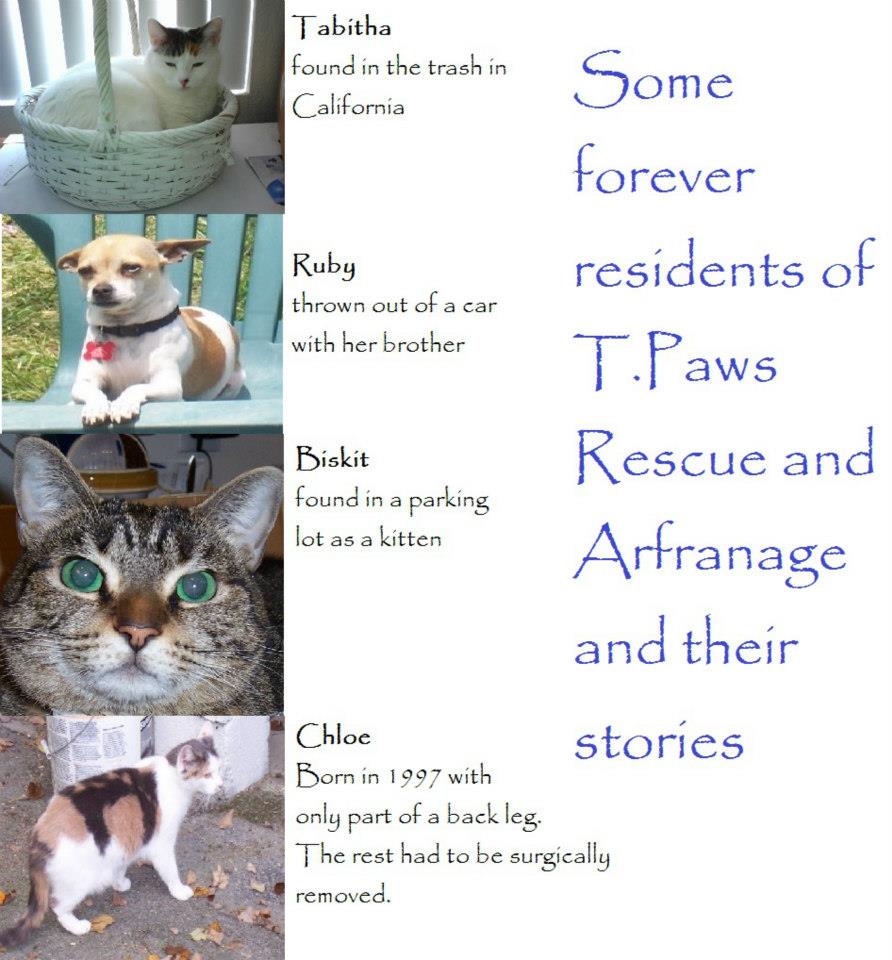
In honor of Chloe


Sunday, November 29, 2015

Release of "Secrets of a Vet Tech II: A Low Cost Pet Care Guide for Pet Parents, Animal Shelters, Rescues, & Homesteaders


After nearly three years of research, Secrets of a Vet Tech II: A Low Cost Pet Care Guide for Pet Parents, Animal Shelters, Rescues, & Homesteaders is finally released.

The second edition, fifty two chapter, 436 page reference, is a resource that no pet parent or animal rescue should be without.

Learn the art of proactive pet parenting that can, not only help you save money, but improve the quality and longevity of your pet's life. Locked within its 52 chapters, you will find well-researched revelations concerning pet nutrition, vaccinations, heartworms, animal behavior, and more.

Acquire the knowledge and confidence to respond to emergencies and recognize illness. The research is done for you in concise and informative charts. Compare the cost of popular flea and heartworm preventatives or study about the use of over the counter and prescription medication.

Learn how to chose a quality veterinarian and how to work together with the veterinary staff to create a health-care team for your pet. Master the steps of the Pet Exam Train (PET), a common sense, at-home exam, that teaches you what is normal for your pet so you can quickly recognize the abnormal.

Not limited to dogs and cats, this reference discusses the care of exotics, including proper habitat and illnesses.

Secrets of a Vet Tech II offers animal shelters and rescues new ideas and resources to better utilize donations, and by doing so, save more animals. This easy to use reference is written with frankness and clarity that teaches that, even in the toughest times, the interest of the pet is still obtainable.

The book is available on Amazon and Createspace. 

Proceeds of the sale of Secrets of a Vet Tech I and II help support the rescue.

Thursday, July 4, 2013

The Terror of Seizures: What you can do when a doctor is not available


I have had three friends contact me this week of the 4th of July regarding their dogs having seizure like symptoms. Sometimes a seizure can last seconds or minutes. No matter how long they last, they are terrifying to watch.

There are different types of seizures and different causes. Grand mal seizures are unique in that they are preceded by symptoms, that if you know what to look for, can let the pet parent know that one is on its way. My dog Copper (may he rest in peace) had seizures from the time he was 2 years old. His were so bad that he often would not come out of it without the help of Valium (generic diazapam). It was given in the form of a suppository.

(NOTE: diazapam is not to be confused with lorazepam. Both are similar but have a different dosage. Diazapam is most effective if given rectally, while lorazepam must be crushed and diluted in water and given internasally in a dog in seizure)

I knew his seizures were coming when he would start to drool excessively, seem unusually uncomfortable and/or needy. Next would come the stumbling, and he would try to get someplace safe. The dogs would gather around him and become protective. Tinker, my chihuhua/peke mix, would keep everyone away from him with the exception of Casey, my golden mix. 

Copper would collapse, his legs would become rigid, he would lose control of his bladder, and then he would start to twitch. Sometimes, he would do what some people recognize as a doggie paddle motion. Casey always licked his ears until he would come out of the seizure. Copper would be very disoriented and absolutely exhausted. He would often want a drink of water.

Casey always watched over him, licking his ears until he was feeling better.

As a pet parent, the things you can do during a grand mal seizure are usually limited. Assuming this is the first time and your local vet is calm, this is what you can do:

The first thing you do is stay calm. I know it looks like your baby is dying, but you have to keep your head together to take care of the situation. Next, you make sure that your pet cannot accidentally hurt him/herself by moving him/her away from other objects. Stay away from the mouth as a dog in seizure may snap the mouth open and closed as part of the seizure activity. Not all dogs react positively to a dog in seizure, so it is a good idea to remove others from the room.
Dog in midst of a seizure.


Sometimes the pet will stop breathing for a few seconds or may show labored breathing. Your job is to keep the pet as calm as possible and let the brain reset itself. A grand mal seizure will last for at least 2 minutes, sometimes more.  One concern with a prolonged seizure is the sudden increase in body temperature. The temperature should not exceed 103 in a canine. Keep in mind that dogs release heat by panting and during a seizure, this is not possible. Therefore, the only option for heat release is through the paw pads. This is where dogs sweat.

If you have access to rubbing alcohol, take a wash cloth saturated with it, and rub the paw pads. This helps drop the temperature. If no rubbing alcohol is available, use cold water. Running a fan on the pet also helps.

When the pet comes awake, it is not unusual for him/her to seem blind and walk into things. It can take quite a while for him/her to appear normal. Keep your pet in a quiet place to recover where you can watch for any further seizure activity.
Dog will have that "far away" look

Other types of seizures also occur and do not present as a grand mal. A focal motor or partial seizure may be localized to one part of the body and the twitching limited. This is usually caused by a lesion, scar, or abscess on the brain.

Reasons for seizures can also vary. A whelping female, for instance, can have a drop in calcium after giving birth, which triggers the seizures. This is very dangerous for the mother dog.

 A sudden drop in sugar called hypoglycemia is another cause of seizure like activity. This is common in tea cup type breeds such as tea cup chihuahuas and yorkies. It it vital to keep something close by such as Karo Syrup to increase the sugar levels if you are a pet parent of one of these breeds.
Dosage for low blood sugar

Poison can reveal itself in muscle twitching and drooling. Rat poison, insecticides, anti freeze, and even chocolates can be among the poisons responsible. Other causes can be encephalitis, distemper, heat stroke, and even kidney and liver failure. 

One thing often mistaken for seizures is the sudden collapse caused by heart problems. Toward the end of his life, my childhood dog, Cuddles, would collapse if made excited by anything. He was diagnosed with congestive heart failure. Typically, with cardiac caused collapses, you will not see the twitching or rigidity associated with most seizures. What you will often see is the color of the mucus membranes change. While they should be a nice shade of pink, the mucus membranes will look a  bluish tint. This indicates a lack of oxygen.
Blue mucus membranes is a sign the pet is getting little oxygen

Whatever the cause of collapse, your vet needs to be informed as soon as possible. There are medications available to help in most cases and depending on the level and time of exposure, it is possible to save a dog that has been poisoned.

One thing to keep in mind on this July 4th is that the drug most often given to help keep our pets calm during fireworks, (Acepromazine) DOES lower the seizure threshold. In other words, if a dog is prone to seizures, you need to ask for another drug instead of Ace. Valium is the most common drug given to dogs who cannot tolerate Ace.

If your dog is experiencing his/her first grand mal seizure and you can get him/her to a vet, do so. An injection of diazapam and iv fluids to bring the body temperature to an acceptable level is the best care.

All pet parents need to be ready for emergencies like this. One of the most essential tools I have is my Care Credit Card, which is a health care card with 6 months interest free payments. To apply, simply go to www.carecredit.com.

Wednesday, May 29, 2013

Using Heartguard? There's something you need to know.


In 2011, the company that made Interceptor, a heart worm preventative discontinued production. Many people switched over to Heartgard.

As you may well know, both Interceptor and Heartgard contain ivomectin as its main ingredient. They both also contain an ingredient to cover most intestinal parasites. Neither will take care of tapeworms, the evil little creatures that come from fleas, but they do take care of rounds and hooks.

Here's the difference. Only Interceptor prevented/killed whipworms.

I took a friends dog to the vet the other day. She was having bloody diarrhea. She was an older dog that had been vaccinated, so I was not concerned about parvo. I expected the diagnosis to be pancreatitis, which often happens when dogs are given human food or get into the trash and find something their tummies are not used to.

However, the vet was concerned about one other thing: Whipworms.

She told me 60-80 percent of her cases of bloody diarrhea in adult dogs since Interceptor was discontinued was whips.

I wanted to kick myself for not realizing that, but my worming protocol covers everything, even without the Interceptor, so I had not had that issue.

So, if your dog is not on a heart worm/intestinal parasite preventive, it is incredibly important. Even if you live in areas that are not prone to mosquitoes, the ingredients in these preventatives will prevent the nasty and unhealthy affects of intestinal parasites. Keep in mind, intestinal parasites can be passed to humans and kids are most vulnerable.

The company was still producing Sentinel in 2011, which covers the same parasites AND fleas, but it was much more expensive. In 2015 interceptor returned to the market. There are also many other heartworm and flea products now available that were not marketed during the time Interceptor wasn't produced.


When I wrote my last book, I was paying only $1.60 per month to prevent heartworm in 12 dogs. That's $1.60 TOTAL, not $1.60 each. If I added cost of prevention for intestinal parasites and fleas, I was paying about $7-10 per pet. Heartworm, intestinal parasite, and flea prevention for much less than any product out there.

For more information on my protocol, and much, much more please check out my book Secrets of a Vet Tech. It will cost you a lot less than a box of Heartgard.

Wednesday, May 15, 2013

The Saga of T.Paws Vet Adventures and How to Manage Your Pet Dollars.


Thanks to some hard thinking and ingenuity, I am able to take care of eleven dogs (and 8 cats and a bearded dragon)  for probably less than what most people spend on one. Here, is a little insight on how I manage it and also a reminder that its Rabies Month in Tennessee!!!

In Tennessee, May is Rabies Awareness Month. Rabies is an acute infection of the brain caused by a virus.  It is usually transmitted from wild animal to unvaccinated pet and then to human. We have been able to make it a rare issue by mandatory vaccination.

Some states require the vaccine every year, while others require it every 3 years. There is no difference in the vaccine, however, the states make the decision based upon the possibility of exposure. For instance, in Tennessee, we live very close to wildlife. Many of us live in the mountains among the forest. While some states allow you to give the vaccine yourself, Tennessee is not one of them. So in Tennessee it is required once yearly to be given by a veterinarian.

The good news is that Rabies Clinics are offered all over the state this month at a discount. A rabies clinic may be held at a local Tractor Supply or feed store. Some veterinarians will pick a Saturday and spend the day giving rabies vaccines. Other vets, like mine, Mount Carmel Pet Hospital   is simply honoring the price all month long. You have no idea what a blessing that is for multiple dog owners.

(For availability in your area, check with your local humane society and check with your vet to see what they will be doing.)

I've decided to use the month as my vaccination month. I vaccinate my own pets for all other diseases, so that's what I did this month. However, I did it a week before I had them vaccinated for rabies simply to reduce the chance of vaccine reaction since most of my dogs are chihuahuas.

I also gave most of my guys a little dose of benadryl (1 mg/lb of body weight) prior to leaving for the vet. This helped them stay a little calmer and also helped to prevent vaccine reactions. 

Since I have 11 "forever" dogs at my rescue, T.Paws, being able to take a few at a time was very helpful. I started out with 3 who had skin issues (Tinker, Blue, Athena) and Ms Ruby, my "right hand dog", who insisted on going.  We discussed the cause, the doctor's recommendation, and cost. They are well aware of the financial challenges I face and are excellent at helping me prioritize and talk things through. I also had the doctor check Tinker's hernia which has been repaired once, and we talked about the possible outcomes of not having it repaired again. I also asked about Ms Ruby's teeth (which they looked at from afar :). She had just had a dental last year, but the tarter was horrible, so dental costs were discussed.  And we talked about the possibility of Blue having a thyroid problem. Then those guys were vaccinated and went home.

Next came Casey. She is my golden retriever mix. She is also absolutely terrified of storms, riding in the car, fireworks, and slippery floors. Dealing with 4 scared chihuahuas is a breeze compared to dear sweet Casey. Not only did she go for rabies, but also to get acepromazine, a common sedative for dogs who are not prone to seizures (it can lower the seizure threshold). Getting there and getting the exam was easy. Even getting the vaccine was a breeze. Getting home was CRAZY! She was so stressed when we got home, she took a sedative and so did I. I was done with rabies shots for that day!

Since the others only needed their rabies vaccine, my dad came over the next day and I had the rest of the clan in two crates. Teddy and Scrappy in one. Pearl, Onyx, Bo, and Panda in the other. We loaded it on the truck and off we went. Teddy was happy to see everyone as he had visited them not long ago, and, being Teddy, wanted to show "his" pack around (he takes his position as the official spokesdog of T.Paws very seriously). Everyone was weighed and vaccinated, and it was a very pleasant visit. Not to mention they loved the ride in the truck.

Here's where money management comes in. As I always do, I put it on the CareCredit Card. As I have mentioned before, this card is a healthcare card that gives me (usually) six months interest free to pay it off.

With a big group like I have, and little money to work with, I try to think ahead and plan on doing one thing a month. In January for instance, I might buy several months worth of Fipronil for fleas even though I don't need it. February, I might purchase extra food, March, vaccines, and so on. So now that I know that Ms Ruby needs a dental, Tinker needs hernia repair, Blue may need blood work, my goal is to put the money I would have been using for flea control (but already bought in January) into my CareCredit and get it paid off.

The doctors both agreed that Tinkers hernia repair needs to be first. So that is what's planned next. Some vets will give you discounts if you have multiple animals having a procedure on one day, so don't be afraid to ask).

But by spreading out the costs of the needs of my animals, using the techniques in Secrets of a Vet Tech , utilizing CareCredit, taking advantage of special discount months, and being completely open and honest with my veterinarian, I am able to take care of more animals for less than some spend taking care of one. And THAT is the secret of living as a rescue here at T.Paws.

Thursday, April 25, 2013

Summer Shaves: To Shave or Not to Shave, That is the Question


In our home, summer time has always meant summer shaves. As soon as it was warm enough, off with the hair!

There is a bit of controversy regarding this issue. Some say that the natural state of the dog (and sometimes cat), is to have a coat even during summer. The thought is that is protects the skin from sunburn, briars, etc and it helps regulate body temperature.

While I do think that has some merit, my dogs have never been sunburned and I've never seen a sunburned dog while working in veterinary medicine. That is not to say it doesn't occur, but I've never observed it.

I personally think it has an advantage that is unrelated to keeping the pet cool. That advantage is getting to see almost every inch of skin on your pet.

Last year, after shaving Scrappy, my big ball of curly fluff, I found a growth near his rectum. There was no way in the world I would have seen it in a regular exam. He has no issues with full anal glands, so I normally did not "visit" that area. It wasn't an area (obviously) that I would normally pet. So, without a shave, I would not have known it was there. I had it removed immediately and after a year, so far, so good. No re growth.

I also think it helps prevent briars from being so attracted to the dogs. After living in Southern California where fox tails penetrate the skin, eyes, and ears of dogs every spring/summer, I realized just how easy it is for briars and fox tails to attach and hide among the fur without anyone realizing it. Having a clear view of the skin allows you to see any briars and remove them before they cause problems.

Another advantage is being able to spot fleas and ticks quickly. I watch for these parasites closely, because if I'm not careful, with a rescue full of pets, a parasite explosion can be difficult to contain. Its much easier to see the SOB's on a shaved pet, than a fully furred one. Frontline also applies to the skin directly, which is an advantage.

I did mention cats earlier. Normally, I don't shave my cats unless one is matted. However, I do have one cat named Peaches, who stands in line each summer to get her shave. When I took Peaches in, many years ago, she was covered in mats. I had no choice but to shave her. So, now, when the clippers come out, she gets in line. I don't ask questions, I just shave. It makes her happy.

UPDATE: Since this was written, another summer shave revealed another growth on Scrappy. It was removed and found to be cancer, but the report said it is unlikely to spread. Sadly, Peaches passed away after a long fight with hyperthyroidism. She was 14 years old.