Showing posts with label Breeding/Rehoming/Adopting. Show all posts

Wednesday, June 27, 2018

The Dangers of "Free to Good Home" are Worse Than You Think


People sell or give away their pets for a variety of reasons. The most common reason include:

  • The family is moving and can't take the pet with them
  • A couple just had a new baby and the pet is no longer a priority
  • The pet is "untrainable"
  • The pet was the child's responsibility and he/she is not taking care of the pet
  • Someone in the family is allergic to the pet
  • The pet parent passed away
As hard as it is to believe, I have even seen an ad selling a Great Dane because he was too big.

Craigslist and social media sites have made selling and giving away pets much easier. It has also created a hunting ground for people with nefarious reasons for wanting to "adopt" a pet. One of those nefarious folks is called a "flipper". They pose as a person very interested in adopting a free pet and appear to be a good home.  Once they have the animal in hand, they quickly "flip" the animal, selling them for cash to the highest bidder. They don't care if the animal is going to a good home, all they see is the cash.

Flippers don't confine themselves to pets. Free horses are frequently sold to slaughter for good money.

Another hunter of free animals, particularly kittens and small animals like rabbits, guinea pigs, hamsters, etc are snake owners. All of those pets listed make a free warm meal for larger snakes. Sometimes the snake owners will be "kind" enough to adopt all of your litter. You may think "Why not? Its less I have to worry about." How would you feel if you saw this on Facebook?

Its shocking, but important to see. 

Free small (and sometimes larger) dogs are often used as bait dogs to train fighting dogs. Dog baiting usually involves tying a dog to a fence or pole and releasing the fighting dogs to tear the bait dog to shreds. In some areas this is a sport, although it is illegal. Some are even bold enough to post it on Youtube.

Free pets are even adopted by people with the sole intention of abusing the animal. In a recent case, a man bought kittens off of Craigslist in Alabama to later stomp them to death in his kill room.

While Craigslist claims that pets cannot be sold on their website, they do allow pets to be adopted with a "rehoming fee". To many that's just another word for "sold". There is no regulation of the amount of the rehoming fee. In an interview with ABC 7 News, the U.S Department of Agriculture claimed it has been "cracking down on online pet sales over the past couple of months". They also said that they are" requiring online breeders to have a federal license" but told  ABC 17 News that "they can't regulate Craigslist pet sales."

Craigslist and Facebook sale pages have become the most common way for backyard breeders and puppy mills to not only sell their animals, but take those free pets who are not spayed or neutered, and use them for breeding. This doesn't mean that they live in loving homes and only are bred as "nature intended". These animals can be locked in cages, sleeping on their own feces, and taken out only to breed and give birth. Although the seller may claim that the puppies have been dewormed and vaccinated, often they are not and once you get the puppy home, he or she may soon die of common preventable diseases such as parvo. Unscrupulous breeders may also remove and sell the puppy before he or she should be weaned, so that they new pet parent will think they are getting a miniature toy puppy.

This also happens with pig breeders. Very few pigs sold as pot bellied pigs are actually pop bellied pigs. Instead they may be hog piglets that have been taken from their mother early. In a few months, you will be left with a 200+ lb hog that ready to root (dig with the nose). He or she will dig up your carpet, dig up your garden, and generally make a mess of things. Unaltered pigs, particularly males become increasingly aggressive. When this happens, what will you do? The breeder certainly will not take the pig back.


Locally,  I often see ads saying "must get rid of today", "first come, first served", "will be taken to the shelter if not adopted today." These words are nothing but bait for these exploitative hunters. They are indeed the hunter, and your pet is the prey.  
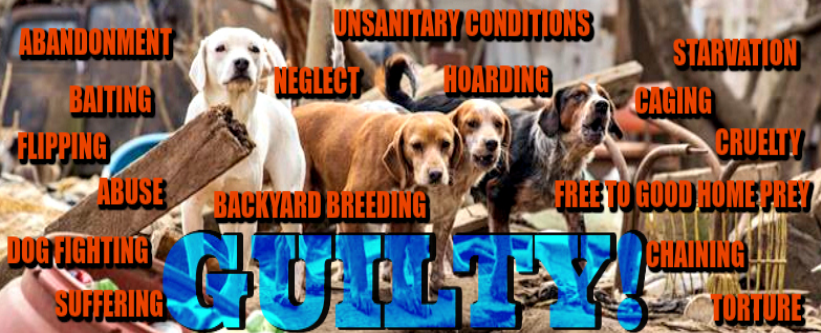


For me, perhaps the most shocking pet hunters and flippers are for-profit "rescues".  Non-profit rescues have all their animals spayed or neutered, dewormed, and vaccinated. They also have the proof that it was done. They carefully screen potential adopters, do home visits, and have a contract stating that the pet must be returned to the rescue if he or she is unable to remain with the adopters.
For-profit "rescues" are just an unethical pet store by another name and they will sell the pet as soon as possible and for as much money as they can get. Again, they have no concern where your pet will go.

It costs money and time to become a non-profit, so becoming a 501c3 non-profit rescue or sanctuary is something flippers are usually unwilling to do. Non-profits must report that money coming into the rescue is used for the upkeep of the animals, vet visits, supplies, food, litter, etc.  For-profit "rescues" can pocket the money and run.

If you really want to find a good home for your pet, the following are guidelines are a good start:

  • NEVER adopt on a first come, first served basis or say you "must get rid of today." Prepare in advance. Its the least you can do for your pet.
  • NEVER offer the pet for free. Ask a rehoming fee of at least $25 for dogs or cats.
  • NEVER guilt someone into adopting by saying the animal will go to the shelter tomorrow unless he or she finds a home. These placements rarely work out. 
  • Have the potential adopter fill out an application before they come meet the animal that also serves as a contract that the animal will not be sold for profit, baiting, or experimentation. Include questions on the application such as will the pet be kept indoors or outdoors? Do the potential adopters have a fenced in yard or will the pet be kept on a chain or in a kennel?  Are there any other pets in the house. How long has the other pet lived with the family? Are there any children in the family?
  • Get vital information including name, address, phone and drivers license number. Refusing to give this information can be one indication that the adopter may not have the best of intentions. 
  • Ask for references. Vet references are preferred. Inquiring on the care of other pets in the home can help the pet parent decide if the potential home is a responsible one. Ask if the pets are up-to-date on vaccines and if he or she is neutered or spayed. 
  • Check with the landlord to see if the potential adopter is allowed pets
  • Insist on a home visit. When there, observe how the other pets are treated. How do the children and other family members interact with your pet.  Also note if the application was filled out truthfully. 
  • Give an honest impression of your pet or your pet may find its way to the animal shelter before long.  If you pet is not potty trained for instance, tell the potential pet parents. Never adopt a pet that does not get along well with other pets or children with homes that have one or both. 
  • Offer the rehoming fee back once the pet is spayed or neutered. Sometimes, those looking to breed will be unwilling to spay or neuter.
While these guidelines may seem like too much, your pet deserves the best home you can find. You owe him or her that much. 

Some areas are forming groups that weed out and report the names of flippers, backyard breeders, those convicted of animal cruelty, and for-profit "rescues". They monitor Craigslist and Facebook for sale pages noting who are frequently adopting and reselling animals that are free to good homes.

Locally, you will find the group  Animal Lovers Against Back Yard Breeders of East Tennessee on Facebook. Their purpose is "for East Tennessee animal shelters and rescues to help keep their DNA (Do Not Adopt) lists current. We will expose known dog flippers, backyard breeders, & those known for cruelty & neglect." Consider starting a similar group in your area.

For more information on pet adoption, pet health, and important animal related information, see


Wednesday, February 27, 2013

Paws and Ponder: Things to know before buying your next pet

I have to tell you ahead of time, that although I am going to cover some things that you may not know about acquiring pets, I may jump on my soapbox a time or two in the process. After so many years as a vet tech and animal cruelty investigator, I have seen a lot of things, so I will be nothing but honest in this article. I also realize I will probably make several people angry, but the welfare of the animals is the important thing to me.

While I would like to think that every pet in the shelter would be adopted, I know that not all people will go to the shelter to adopt. I have even met people who refuse to adopt from rescues because they feel their questions are too intrusive.

For me, in a perfect world breeding pets would be highly regulated. I've heard the statement over and over "Its my d*mn (fill in the blank with species), I have a right to breed if I want to as long as I find them good homes!!!" To which I usually reply "Then you also have the right to accompany me to the shelter to euthanize them when they get older and no one wants them."(Spoken by someone who has  had to do the euthanizing and help manage a shelter, by the way. Sorry)

The purpose of this blog is to discuss a few things about acquiring a new pet that are not always considered.

Some simple things to begin with is making sure the puppy/kitten you are acquiring has been properly weened from the mother. The mother is ESSENTIAL to providing proper immunity. The immunity she gives a properly weened puppy lasts about the first 8 weeks of his/her life giving you time to begin vaccinations at 6 weeks as mom's immunity dissipates. Without that, the chances that you are paying for a puppy that will get parvo, distemper and all manner of other issues is very high.

If the puppy has not had this opportunity, and especially if he/she needs to be bottle fed, you had better be experienced. A bottle fed puppy has to eat every 2-4 hours depending on age. Are you prepared to stay up all night? Take him/her to work with you?

Another issue is something it seems people are afraid to talk about. While a teeny tiny tea cup puppy is adorable, they were not supposed to be bred this small and it leads to a number of HUGE problems. Tea Cup Yorkies/Morkies/Maltese/Chihuahuas, are very popular right now and breeders know it. The problem is, even if these puppies make it through weening, their problems are just beginning. First, it is often difficult to get them to eat properly. Their sugar levels plummet so easily, the breeder will most likely tell you to keep honey, syrup, or some other form of glucose (sugar) ready to put into a syringe and force down the pup's throat in order to bring the levels up and keep the puppy out of a coma. I can't tell you how many of these little guys I have seen die. I had to watch the pet parent of one not too long ago cry as the doctor and I were trying to bring the little puppy out of a coma and then having to do CPR to bring back her heartbeat. No matter what we did, we couldn't save her. These puppies, much like bottle fed puppies can't be left alone for this very reason.

Another issue to consider again deals with the genetic manipulation of man. One of the most widely recognized and loved dogs is the English Bulldog. With the big body, no neck, and a pushed in face only a mother could love, they are one of the most expensive dogs to own. Not only do they usually cost in the thousands to buy, they are riddled with health problems. In fact, if you look at the makeup of the dog, they were bred TO have health problems. They are very heat intolerant, have many skin issues and ear problems, and find it very difficult to breed. In all my nearly 20 years in the vet business, I have NEVER met one English Bulldog that was healthy although I am sure at least one exists somewhere. When you are considering a breed, think about these issues. Be prepared to have a very large vet bill for the rest of that pet's life. Some of the surgeries your pet may have to undergo simply to breathe well are found HERE, and they are not inexpensive surgeries. They are also prone to yeast infections in the folds of the skin around the tail, nostrils, and even in the ears.

To me, an indication that a breed should not be bred is when natural breeding or birth cannot occur. It sickens me to see a vet or breeder masturbate a male to collect his semen and then artificially inseminate the female. French and English bulldogs are both good examples of dogs that often must have this done in order to mate. In my time as an animal cruelty investigator, I received calls of animals being used sexually, and to be honest (and I realize I will make people angry), I don't see much difference between the two.

The females of these two can rarely give birth naturally so every single time they must have a painful C-section, then be expected to feed her pups. I don't know about you, but I find that cruel and don't think it needs to be supported. If we would stop buying these breeds or insist that they be bred back to the point that they are healthy, then breeders would change.

I would hope that by now, most people would know that most dogs sold in pet stores are from puppy mills. Puppy mills are horrid places where the breeding pets are kept, most often, in small cages, never really treated like a pet, but a breeding machine. Raids on puppy mills produce terrible images of neglect, feces covered cages, and worse. Yet by the time the puppies get to the store to sell, they have been cleaned up and made to look beautiful but often have underlying diseases. Not to mention the horror their parents are experiencing back home.

Puppy mills are now finding that pet stores will not buy their pets anymore, so they are resorting to the classifieds. A clue you are dealing with a puppy mill is that they advertise several different breeds for sale. Keep in mind, just because a dog comes with AKC papers does NOT mean it has been well taken care of. The only thing it means is that the sire and dam (dad and mom) are known and that the puppies were born on the property.

Tennessee and Virginia (my two local states) both passed legislation in the past few years. Tennessee''s legislation  requires  licensing, inspection and regulation of commercial dog and cat breeders, which is not enough in my opinion. They were finally forced to face the issue after a huge puppy mill facility was raided near Nashville. Read that story HERE

Virginia's reaction was to reduce the number of breeding females allowed on a property. That caused a ton of animals to be begrudgingly turned over to local rescues throughout Southwest Virginia and East TN. One kennel alone in Gate City, Springvale Kennels, owned by Theda Jennings, surrendered dozens of dogs to reduce her number to 29. For that story, click  HERE

If you go to a home, where the individual refuses to let you in the home/facility, insists on meeting you somewhere else, will not even let you see the parents, then walk away. Its a very bad indication.


Next you have backyard breeders. A backyard breeder is described as someone with all or some of the following characteristics. Excessive breeding of a female to the detriment of her health. Poor veterinary care. Tail docking at home instead of under veterinary care. Not properly vaccinating or deworming the pets. Selling the pets on a first come, first serve basis, instead of concern for the pet's future. Lack of knowledge of selective breeding goals. Breeding for fighting, or as bait animals. Allowing breeding without the concern of finding good quality homes and simply adding to the over population problem. And my favorite pet peeve, not even knowing how to spell the name of your breed. She is a CHIHUAHUA not chiwawa. He is a SHIH TZU, not a shit zue.

 I am of the firm belief that if you want to breed animals, you should be trained to do so,  rescue your breed from shelters, and assist in euthanizing shelter pets at least once before you make the decision to breed. Too many breeders insist that their pets never make it to the shelter, but they do. There are tons of purebred dogs in shelters. As the saying goes "don't breed or buy while shelter pets die". So come see what its like to have to participate in euthanizing before you add more pets to the world.

A recent fad in puppy breeding is "designer dogs". Designer dogs are guess what? Mixed breeds that you will pay hundreds of dollars for. No matter how you phrase it, mix a chihuahua with a dachshund and you get a mixed breed dog, often called a mutt. Know where else you can get the biggest selection of awesome designer dogs? Your local shelter. Check them out first and save a life. 


Tuesday, February 26, 2013

Safely Rehoming your Pet:When Free to a Good Home is Dangerous


Lately, in East Tennessee, we have noticed an individual, or indivduals, responding to the "Free to a Good Home" ads. She/he claims to be the new FOREVER home home and loved on the pet in your presence, takes the pet home, and the pet disappears in days.

Its nothing new. When I was a kid, a local "animal lover" was caught up in a scandal of acquiring animals to sell for experimentation. Only then the acquiring was done by stealing family pets and grabbing every stray pet he could find.

Its much easier now to acquire those pets. With Craigslist, the classifieds, online yard sale groups, and sites dedicated to finding good homes for pets, answer an ad, seem nice enough, and the owner unwittingly hands you the pet thinking their pet will be safe.

In addition to experimentation, pets like this are often used as bait dogs to train dogs to fight, kittens, bunnies and all animals small enough are used for snake food, while others just use them to make a quick profit.

Most people believe they can spot a bad person, but the was proven untrue locally when that "bad person" was a sweet late-teen-to-early-twenties young mother who said it was for her son's birthday.

Now it has been confirmed by Facebook posts that she was putting them up for sale almost immediately after taking them home.

The families were devastated. They thought they had found a great forever home for their dogs who would have a little boy to grow up with. Instead they don't know where the pet's are, who bought them, and if they are safe. They didn't give their pets up because they didn't love them, but for reasons that were well thought out.

So what is the proper way to rehome a pet? While there is never any full proof way, the following will go much further to ensure a good home is chosen. These are some methods used by rescue groups to screen the potential home:

  • NEVER adopt on a first come-first serve basis. May work for yard sale items, but not living and breathing creatures. NEVER advertise "must go today". Not only does that sound like you don't give a crap about the pet, it means you will give him/her to the first person who shows up.
  • NEVER offer the pets for free. It attracts the bad guys. Insist on a rehoming fee. For bunnies, guinea pigs, hamsters, make sure the fee is high enough not to attract someone looking for lunch for their snakes.
  • Have them fill out an application for the pet online that also serves as a contract that the pet will not be sold for profit, baiting, experimentation but that you will be contacted first if it doesn't work out. Make sure they know that you will verify their information when you meet. If they refuse, they don't get the pet. 
  • Get their name, address, phone, and drivers license number and confirm it when they come to get the pet.
  • Ask for references. Particularly vet references. You want to know their history on how they treated their other pets. If its not good or they have a history of giving away their pets, don't adopt to them. Also ask for the name of their landlord and make sure they are allowed pets. Although some good people sneak animals into homes/apartments, if the landlord finds out, the pet will have to be rehomed again. 
  • Insist you bring the pet to THEIR home. You want to see the environment. Watch how they and/or the kids interact with your pet. If your pet piddles on the floor and they don't get upset and just clean it up, that's probably a good sign. If they get upset in front of you, what will they do when you are gone?   If you are not comfortable with what you see, don't leave the pet. 
  • Be honest about your pet. If he/she is not potty trained, tell them. Its one of the top reasons people will get rid of a pet. Never adopt a pet who does not get alone well with other pets or children into a home that has one. Your pet will be the first out the door when it doesn't go well.
  •  If your pet is not spayed/neutered, offer to give them their rehoming fee back once you receive proof that this has been done. Typically, in my experience, those who refuse to spay a female are only looking for a breeding bitch and another way to make money. There are almost always local groups or clinics that will spay, neuter, vaccinate, and more at a reduced price. Better yet, do all that before you rehome them. That's the way good rescue groups work. 
  • If your pet is microchipped, some recommend keeping the information in your name so you are contacted if the pet is surrendered to the shelter or if he/she runs away from a bad situation. 
  • For puppies, NEVER adopt them out until they are fully and naturally weaned. They will have no immunity if ripped away from their mother and their chances of survival are little. If for some reason, the mother rejects them, and you need help bottle feeding, only choose experienced people to adopt to or to foster. 
  • If you decide your young pet is going to have to go to the shelter or rescue group, please vaccinate 1-2 weeks before taking him/her in if possible (not before 6 weeks old). An unvaccinated or poorly vaccinated puppy or kitten is incredibly susceptible to disease, and although cute puppies and kittens get homes quicker, if they are unvaccinated, their chances of survival are lower. 

While these methods may take a little longer to find a good home, it is the least you can do for your pet.  My feelings are very strong on this matter. Animals are not commodities to buy at sell without consideration for their welfare. Those who think they are, don't need to have a pet. If for any reason, you get the feeling that perhaps you have chosen the wrong person for your pet, never hesitate to change your mind. Your pet's quality of life is dependent on it.

    Sunday, February 10, 2013

    Moving? Options for your Pets


    " I have to move and can't take my dog/cat/iguana etc with me"

    This is a sentence uttered quite often at local shelters. So lets talk about it. First, we have to consider that everyone has been hit hard in this economy and many people are losing their homes and/or apartments as they lose their jobs. Its a fact of life.

    At the same time, sometimes there are ways to avoid losing the pet when moving, and most certainly, a better way to transition the pet if surrender is necessary.

    Before your move, check this site to help you locate pet friendly apartments. It would also behoove your local shelter and humane society to keep a list of local apartments that rent to pet owners.

    The US government, realizing that many people would rather be living in substandard condition rather than give up their pets passed a law that many people are unaware of:

    "Tenants in "federally assisted" housing for the elderly or handicapped are allowed by law to own pets.  (Housing and Urban-Rural Recovery Act of 1983, 12 U.S.C. section 1701r-1.) This rule applies even if the federal government does not own the rental housing—it's enough that a federal agency (the U.S. Department of Housing and Urban Development, for example) subsidizes it. Owners and managers may place reasonable regulations on pets, after consulting with tenants.  Contact a local HUD office or your county Housing Authority to find out if a particular rental is covered."

    This also applies to disabled individuals, particularly if the pet is an emotional support pet as designated by your doctor. For more information about this law, please click  here.

    Next, talk to the landlord of the potential place you will be renting and ask for specifics about the "no pet" rule. You may find that he/she is referring to dogs/cats only, and your iquana or bearded dragon is no problem. Also inquire as to whether a little extra rent per month would persuade the landlord to reconsider. In one house I rented many years ago, I agreed that in exchange for allowing pets, I would improve the property over time. I painted the entire house, inside and out which helped the landlord when it was time for me to move out. I made sure no damage was caused by my pets, and if it was, I repaired it at my cost. If I ever needed a good reference for further renting, I proved my worth as a tenant and was more likely to be trusted with pets down the road.

    So what if you have done all these things and you still are not allow to take your pets with you? First, is your situation temporary? Perhaps a friend would be willing to care for Sparky for a few months. Never hurts to ask. If that is not a possibility, what is the best way to go about finding a new home?

    There is nothing that ticks me off more than an ad that reads "Dog free to good home: must get rid of today". First, your dog is not trash to "get rid of". Second, you were probably aware long ago that you would probably need to rehome your pet, so be responsible about it.

    If you know the move is coming in a month or two, contact a local rescue group and see if they would be willing to do a courtesy listing for you on www.Petfinder.org. Having your pet adopted out through a rescue organization should ensure that the applicant has been carefully considered by the rescue and his or her references checked. Instead of dumping your pet at the rescue, "foster" your pet at your home until a good match is found.

    If your dog is a particular breed, look for breed rescues. Some rescues specialize in German Shepherds for instance, and may even consider a mix breed that is "close enough". Be willing to look not only in your immediate area, but in neighboring states. Thanks to the power of the internet and social networking sites, there is a great network of animal rescuers who will drive and even fly a pet to another rescue to save his/her life. Be willing to be the driver, or help pay for gas.

     At the Scott County Humane Society in Gate City, VA, for instance, we were able to arrange transport of nearly a dozen chihuahuas to a huge and fabulous rescue called Popcorn Park in NJ. The power of Facebook networking and the willingness to ask, makes a world of difference.

    A lot of people immediately look for "no kill" rescues, which is understandable. But not all "no kill" rescues are alike, so research the rescue first. Keep in mind, if an animal can't find a home in a no kill facility, that sometimes means a lifetime in a cage. Not all "no kill" shelters have a good group of volunteers willing to foster. One way to find out their reputation is to Google their name. Reviews may come up that you wouldn't have seen otherwise.

    "Kill shelters" are often given a bad reputation. I hate to use that term, because they are not evil entities. In fact, they are usually the good guys who are willing to work in an environment where they know they will love an animal only to have to euthanize her. I've noticed over the years having volunteered and worked in "kill shelters" that the same people who condemn the shelter are the same ones who allow their pets to breed or who say they love animals "too much"  to work in a place "like that". They refuse to volunteer at weekend adoption events or even buy kitty litter for the shelter. One thing I can tell you, although no two shelters are the same, most have good people who love animals enough to allow themselves to hurt when they can't save them all.

    So, with that said, save a "kill"shelter for last. Not only for your pet, but for the people who work there. If you do take your pet there, offer something that will be a great incentive for adoption. For instance, if he/she is not already altered (spayed/neutered), offer to pay for it. Get the pet fully vaccinated at least two weeks before entering the shelter. That will protect the pet and also give her an extra boost for adoption. Write down anything you know about him. Is he good with kids? Get along with other animals? Is she house broken? Did she go to obedience school? Does he love to cuddle? Is he a great lap dog? Particularly gentle? Consider it like writing a resume for a job, but never lie. If your dog hates kids, make sure they know that. If he is owner protective, or food aggressive, be honest about it. It may not disqualify him for adoption, but it will help the shelter place him in a situation to suit his needs.

    As tempting as it is to give your pet away free to "save" him/her from the "pound", please do not adopt to the first person who responds without consideration of what type of person they are. Dog fighters are notorious for responding to free ads for bait dogs. Free rats or bunnies to good homes, often get to be snake dinner. A free indoor cat can end up a barn cat, which is not in itself bad, but if the cat is older and declawed, she may suddenly find herself in a position to defend herself without the necessary tools. If you are going to advertise on your own, ask for a rehoming fee, and use the same criteria used by rescue groups. Ask for references including the vet they use. And call them all. Find out what kind of facility the pet will be living in. If the dog is going to be tied out in the back yard, that is most likely dooming him/her to a lifetime of boredom and neglect. Ask if you can come by to see where your pet will be living. If they say "no", don't adopt the pet to them. A family who knows they will provide a good home would have no trouble showing you the love their home provides. Be diligent. Its the least you could do for your pet.


    Friday, February 8, 2013

    Dogs,Cats, and Kids, Oh My!


    My thoughts when I first started writing Secrets of a Vet Tech, was to help pet parents who had been hurt financially and were struggling to keep their pets. It seems everyone I know is either losing a job, having a medical crisis, or losing their homes.

    As a rescuer and a former member of a humane society board in charge of operating an animal shelter, I am well aware that in times like these, sometimes the first to go is the pet. It was for that reason I was trying desperately to find ways to make keeping the family pet feasible.

    Humans who work in a shelter, especially a kill shelter, tend to become very bitter. They see animals dumped like trash, neglect and abuse, and backyard breeders who use an animals to make a buck. The animals come in damaged and abandoned, and the shelter staff tries their best to make them feel love knowing that they may have to turn around and euthanize that same animal that they, themselves, have come to love. Its enough to drive you mad.

    Those kinds of people are necessary however, because they force themselves to see daily what others can't even stand to read about.(How many of you wanted to stop reading the paragraph above?)

    At the same time, that anger and bitterness, needs to be turned around into searching for solutions. Not every person who brings their pet to the shelter is a bad person. Quite often, he is a good person beating himself inside for not being able to find a better solution.

    That's why I wrote the book. If we can find ways to make it affordable, most people would LOVE to keep their family pet. Whether it is medical issues that can be taken care of at home, preventing medical issues with preventive care, finding financial resources to help in times of need, or just not making them feel like bad pet parents when they can't afford top brand foods, we have to do something.

    Aside from financial issues, what are some other reasons people give up their pet? That, my friends, will be the discussion of the next few blogs as we try to find solutions to keeping that pet with the family. 

    First, let's discuss babies and pets.  The young couple desperately in love adopt a pet not even considering that they will probably have a baby during the lifetime of that pet. The baby is born, replaces the dog/cat etc, and no one understands why the pet gets upset. Then he/she is considered "too dangerous" to be around the child and off to the shelter he/she goes.

    I realize how tempting it is when you start a new relationship and a new family to want a pet. Been there, done that. But please take into consideration that dogs, cats, and other common pets can live twenty years. Instead, consider getting a pet with a shorter lifespan. Make an awesome aquarium set up.  Get a rat (which makes an awesome pet) or a guinea pig. Both of these pets can be held and cuddled when raised from young ones, yet their life expectancy is 4-6 years.

    If you do have a dog and you know a baby is on the way, go through a dog training course. This will give your dog the discipline needed to learn to sit and stay while you take care of baby needs. It will also build a good relationship between you and your dog that will give you the confidence to know that he/she will obey. It will also make it plausible for  you to involve your dog and baby in activities together. Baby can chill in the stroller while Rover gets some great exercise walking on a local walking path.

    So what about the cat? Too many cats are surrendered to shelters because an ill informed doctor convinces the mother cleaning the litter box will kill the baby or the cat will smother the child. Common sense goes a long way in life. First, if you are worried about the litter box, wear gloves. They're cheap and effective. Problem solved. Cat gets to live.


    Next, if you are worried about the cat smothering the baby, don't leave them in the same room. To a cat, a person, baby or adult, is a heating pad. The face is like a heat vent because warm air blows out (at least as long as the person is alive). Contrary to popular belief, the cat is not an evil entity with a diabolical plan to kill the baby. He just wants to be warm and cozy. Buy the cat a heating pad that is warmer than the baby, sprinkle a little catnip on it, and Baby will be forgotten.

    Other issues I have heard from pet parents are worries of zoonosis. That's a fancy word for diseases that can be passed from animal to human or human to animal. The answer to this is pretty simple. First make sure your pet is well vaccinated and dewormed. Practice good sanitation. Clean up after pet and baby. Never let the baby near the litterbox. Its really fairly simple.

    While I realize that having a new baby in the house can be very overwhelming, I also believe we should take our commitment to our pets seriously. If, however, your solution to the situation is putting an inside pet outside and forgetting he/she exists only at feeding time, then, yes, find a another home for him or her. There is nothing sadder than a single pet once part of the family, abandoned outside where he can only watch life go by. A multiple pet home, such as one with two large dogs, can at least entertain one another outside.

    My intention is not to make you feel guilty. It is to approach an issue head on and look for solutions. The solution may not be to keep the pet, but finding a new home for him or her can be much less traumatic than dumping at the local shelter and running. It can be easier for you and the pet. In further blogs, I will examine the options when looking for another home and I will help you develop criteria when searching for a new family.